Showing posts with label contentarea. Show all posts

Tuesday, April 30, 2013

~Writing Riddles for Mini-Research: Minilesson Magic

Common Core requires that students perform mini-research projects throughout the year. The part that I have trouble with is how something can be "mini" while also "meaningful." I tend to dig deep on our writing units. How can we write smaller and make our kids smarter writers at the same time?

Warning: This post is going to be long because my kids' writing riddles are too cute not to share! Check them out, then read about how we got to this point :) 

One of the intents of my plans with our Human Body Systems unit was to have students complete a research project on a disease of interest. My goal was to encourage healthy living as an outgrowth of our Human Body objectives. However, it is the end of the year and we have a LOT left to do. I felt a little lazy making this decision, but I decided not to launch a huge, in-depth research project. But, I did come up with what I think is an AMAZING idea for my classroom because of its ability to meet many common core objectives, to transfer fluidly to a 1-1 classroom environment next year, how it connects with my students' LOVE of celebrating and sharing their writing, and how it capitalizes on our love of task-card-like learning modes. What am I talking about? "Writing Riddles for Mini-Research." It will be ALL-the-RAGE! :) I promise! <3

How did I get my students started? I wanted to use their curiosity about the human body to my advantage. I created a simple "Wonder" sheet. I gave students 4 categories for generating topics: organs and other body parts, habits, diseases, and curiosities. (You can click to catch it for free from my google docs!)
 After brainstorming, students circled their top two choices (or wrote them in the bottom block on the worksheet). I then went through each one and approved their topics. I just wanted to make sure everyone studied something different. Next, we spent one day in the lab researching and one day in the lab typing. Here's a sample of my favorite Writing Riddle paragraphs:
What is "Progeria"? 
What are "the kidneys"?
What is "the brain"?
What is "ear wax"?
 What is "motion sickness"?
What is "eczema"?
What is "the appendix"?
What is a "muscle cramp"?
What is a "heart attack"?

What's a Writing Riddle? 
After reading those great examples, I'm sure you've got it, but basically, students write paragraphs  in a riddle-like format. (For once, I encouraged my students to be a little vague!) Once the paragraphs were drafted (we use a wikispace as a writing portfolio), I went into our wikispace and cut and pasted all of the paragraphs into powerpoint slides. Then I added cute frames to make the paragraphs a little more jazzy (but in a rush, you could just pick a cute font and move on!). I also included a number on each slide (you could also do this by just writing a number on each if you don't have time for a huge production).

How will we share our writing riddles? After printing all of the slides, I will set up an around-the-room task-card like reading/writing celebration. Students receive a worksheet with all of the questions listed. As students move around the room reading each card, they decide which question the riddle paragraph answers. For example, if I read #8 and know it is describing a heart attack, I would write #8 beside of the question "What is a 'heart attack'?"

Writing riddles...why I love it:
I was perplexed by the idea of "short research" called for by the common core. I mean, I get that it can be done and that what we often do in science or social studies (using our textbooks) can be considered "short research." However, I also interpret short research to mean short-term research projects that still culminate in some type of product created by the students. Short research should still be purposeful and have a sharing component. (See why I was perplexed? I can rarely do something small-scale and feel like it was meaningful to students). Wow! In our "Writing Riddles" project, I got all of that and more. In total, it took students about one day to research, one day to type, and it may take us two days to have enough time for everyone to read most of the riddle paragraphs. I can't wait to do this next year~~more often and with more topics. How much better will my students be at synthesizing researched information and turning it into interesting pieces of writing?!?!?! (You can already see some of the creativity coming out in some of the examples above.)


W5.2 Write informative/explanatory pieces to examine a topic and convey ideas and information clearly.
W5.2d Use precise language and domain-specific vocabulary to inform about or explain the topic.
W5.6 With some guidance and support from adults, use technology, including the internet, to produce and publish writing as well as to interact and collaborate with others; demonstrate sufficient command of keyboarding skills.
W5.7 Conduct short research projects that use several sources to build knowledge through investigation of different aspects of a topic.
W5.10 Write routinely over extended time frames (time for research, reflection, and revision) and shorter time frames (a single sitting or a day or two) for a range of discipline-specific tasks, purposes, and audiences.
L5.1-3 All Conventions of Standard English and Knowledge of Language Standards are included in this activity
L.5.6 Acquire and use accurately grade-appropriate general academic and domain-specific words and phrases, including those that signal contrast, additoin, and other logical relationships (e.g., however, although, nevertheless, similarly, moreover, in addition.

Room to Grow Objectives (Future Minilessons): 
W.5.2b Develop the topic with facts, definitions, concrete details, quotations, or other information and examples related to the topic.
W.5.2e Provide a concluding statement or section related to the information or explanation presented. (Some students concluded in interesting ways, like the one who wrote about car sickness).

Next year when we are 1-1, it might make sense to have students post their Writing Riddles on our classroom blog. This would allow them to include other aspects in their research, like multi-media components, images, and diagrams from a web-based source. I'm thinking, students could have the Writing Riddle Post set up with their paragraph, the reader could make their guess, then have a video and/or image link to click on in order to reveal the answer and learn more.
* SL5.5 Include multimedia components (e.g. graphics, sound) and visual displays in presentations when appropriate to enhance the development of main ideas or themes.

Anyone else SUPER EXCITED about the possibilities of this little idea? (I can't wait to use it a million times next year and see how it evolves!)

Since this is a new idea that I have tried with my class, I am linking up with Tried  it Tuesday. Hop on over to check out more new ideas from other great teacher blogs.
Photobucket

PS: Those super cute polka-dot frames are from. Graphics From the Pond: http://frompond.blogspot.com

Sunday, March 31, 2013

Human Body Systems-Ready to Teach!


When we return from break, we will be learning about human body systems. We have to learn about the respiratory, circulatory, muscular, skeletal, nervous, and digestive systems. This is new in our curriculum this year, which means  I get to learn new stuff too and figure out how best to teach it. Unfortunately, I feel like I have struggled all year to teach science in truly meaningful ways. Mainly, I feel like our new curriculum is shallow and widespread (we went from 4 goals/units to 7 domains). I'm not trying to be a baby (maybe I am) but I didn't like science to begin with when I became a teacher and then as I became a 5th grade expert on my science content areas, I began to like it more. I even got over my hatred of sand all over my room when we were learning about erosion, deposition, and weathering (no more landforms in 5th grade :( )

Now, with no {real} training or investment from our district, we got to start from scratch on a number of these units. We get the impression that no one is interested in investing in these standards because we will be transitioning to Next Generation standards in another year. (So, why didn't we just leave our old standards the hell alone as we also transitioned to the common core? In addition, we also have a 5th grade science EOG...on new standards...love it! That's education for you.) Discovery Ed's science tech-book was the only new resource we were given, which I'm also not that big of a fan of because it's pretty basic. Maybe I will appreciate it more next year when we are 1-1 and I can more easily assign components of the units to my students.

Okay, now that I have (somewhat) vented, I wanted to share my plans for the Human Body Systems with you. I'm actually kind-of excited about this unit.

We are going to start with nonfiction-based research in reader's workshop. I am going to try to embed as many nonfiction review lessons as I can, probably spending a majority of my lessons focusing on how author's signal vocabulary words and provide us with definitions (aka-context clues). Dedicating about two weeks for this in reader's workshop, we will still have a few weeks for looking at "Test Talk" for the reading EOG.

To hold all of my students' research together and to help them learn the important parts of the Human Body Systems content, I created a Human Body Systems Student Encyclopedia.

This is meant to be a down and dirty science unit. (Did I mention I will also be teaching FORCE and MOTION at the same time during our science block? Phew! Maybe I could have taught all of these standards if  I totally ignored social studies all year. How sad! :( )

During reader's workshop, I will start with a minilesson (probably a video, a journal question for students to respond to, or some other type of engagement activity, and a nonfiction-reading based review lesson), then students will move to articles that I have placed around the room. (I am getting articles from Discover Ed, readworks.org, http://kidshealth.org/kid/htbw/, and kidnetic.org, and I will be pulling books from the library.) I included links from readworks in the Human Body Systems research project. If you don't know about readworks.org yet, you should really check it out for decent nonfiction--free--and lexiled. (You can check out the list here and go to readworks.org to search for them.)

Another great resource I found was kidnetic.com/innerg. You can see below that you put a body part in place, then click on BRIGHT PAPERS on the RIGHT to learn more about the body part. I will either print off the Bright Papers for more research and/or head to the lab at the end of our 6 body systems reader's workshop cycle and let them click around to learn more and add info to their encyclopedias. We will also be using http://kidshealth.org/kid/htbw/.

Each day, we will focus on a different body system. The research sections for each body system include: coverpage/labeling diagram, structure/description/function chart for body parts, a more detailed diagram for labeling or other extension graphic organizer, a chart for students to list "Top 5 Ways to Keep this System Healthy" and "Illnesses and Syndromes that Can Affect this System," lastly, students complete a page where they try to find connections between different systems.

Then, in our writer's workshop block (since I plan for this to turn into a mini-writing project), we will do some sort of science activity to help students better understand the parts of the systems. When we are ready for the mini-writing project, I hope to have students focus on how to take care of one body system by doing more detailed research to understand how a specific disease or ailment affects a system (or multiple systems). I am hoping to make this unit deeper by providing a healthy living spin on it.

Human Body Systems now includes an answer key to help teachers provide feedback and help your students complete their research booklets! This was the most requested change to the Human Body Systems product and I'm so thankful for all the love sent through feedback and everyone's patience! If you have already purchased this product, please re-download for the updates! In addition the answer key, I included a page of the suggested activities that are listed in this blog post.

As I was planning this unit, I also showed some "love" to a few other TpT sellers. I purchased these posters from Mrs. Bell at Tangled with Teaching. It will make a great bulletin board and I will probably copy a set to place around the room when students are rotating to read their articles (it will provide a short break from longer articles and maybe reinforce something they have read. The posters come in two versions.
The human body systems clip art I used for my encyclopedia's came from Teachers Clipart and I found a great packet to use for my language/word study block from Mark Aaron, a FREE set of lessons for Human Body Idioms....go...grab...it...now!

Here are a few activity ideas: (you can also find these by following my Science Ideas pinterest board)
Make a Spinal Cord (spelloutloud.com)
Make a Skeleton (post includes possible read alouds--I would use toothpicks instead of chalk)
Make a Model of  Lung
Digestive System Activities
Importance of Cerebrospinal Fluid w/ an Egg (cool!)
Edible Bone Model (yum!)
Ideas for Cardiovascular System Activities

Phew! Long post, but I hope you found some ideas you can use :) Oh yeah, do you have any favorite activities you do with HBS? Other ideas? Feel free to let us know in the comments section!

Monday, September 3, 2012

Quick Freebie: Historical Fiction: Holocaust Parent Letter

Hi Friends!

Happy Labor Day!

Have you upper grades teachers been brave enough to embark on a study of the Holocaust? This year, we decided to use the Holocaust as our topic for our Historical Fiction reading unit, which includes student book clubs.

Here are the books we chose to use:


All of these books (except # the Stars were new to me). I had seen snippets of The Boy in the Striped Pajamas movie, but had not read the book. Of course, we were concerned about age appropriateness. Although I don't think I would embark on this study with lower than 5th graders, I felt all of the books were very appropriate and held students attention the whole time.

I love Jerry Spinelli and was so pulled into Milkweed (and Jerry's poetic, rich way of writing) that I had to run to Barnes and Noble to buy my own copy so that I could mark it up with underlines, stars, and comments. Yellow Star was the perfect book for my readers who need to build stamina. Jennifer Roy writes the story of her aunt Syvia (who was taken to Lodz ghetto with her family at the age of 4) and crafts the scenes of the story in short, easy to read poems. I also love this book for the historical fiction unit (although of course it isn't fiction) because each historical change or transition that happened in Lodz ghetto is written about through a nonfiction introduction before each section of the story. So, we hear about what was happening in a direct, historical summary sort of way, and then we read about it through Syvia's young eyes.  

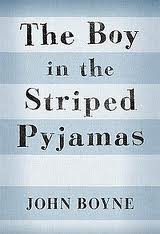
The Boy in the Striped Pajamas was an easy read. If you have not read it, Bruno and his family move from Berlin to Auschwitz because Bruno's father is a high-ranking general. They live right outside of the concentration camp, and through exploration, Bruno meets Shmuel (a young Jewish boy, ironically born on the same exact day as Bruno) who lives on the other side of the fence. Throughout reading this novel, we have to pick up clues about how the Jews were treated, who Bruno's father is, and deal with the naivety of Bruno who complains about having to leave his 5 story house in Berlin as Shmuel is wasting away in the concentration camp.

In this unit, we have created double-timelines (using the top half for what is happening in the character's life and the bottom half to record the historical information we learn from the book). Students launched their book clubs by creating club names and club norms that they hold themselves accountable for following. My goal is that students read two books from the unit in their book clubs so that we can focus on making rich text-text connections and compare and contrast the characters, setting, and the author's handling of the material.

I thought you might like a copy of our parent letter that we sent home prior to the unit to give families a chance to talk about the topic, preview their child's book if desired, and ask questions about the unit. This has been one of my most favorite units as it has allowed us to talk about human behavior and to question history.

I have uploaded the letter to my teacherspayteachers store as a freebie. It is a word doc so that you can modify it however you like for your own use. 

I hope to have more time to write about this unit and share some of our minilessons. As for now, it's off to work on report cards...fortunately, we only have 9 more school days until our FALL BREAK!!! :) 

Thursday, March 24, 2011

Why Vocabulary Instruction?


Why have I created so many activities for vocabulary?

It is imperative that students master vocabulary in order to truly master a content area and be successful in future grades. Wouldn’t it be nice if when you were teaching ecosystems (part of your curriculum) and you talked about PRODUCERS (organisms that make their own food), all students already had mastery of the word PHOTOSYNTHESIS (since you know that this is in a previous grade’s curriculum)?  In order to carry these important words with them to the next grade level, students must be afforded more than simply hearing the words in whole group instruction, seeing them in the content-area reading that they do, and having them embedded in their classroom activities. Don’t think direct instruction in vocabulary is necessary? Think about your EC students, ESL students, and struggling readers. Heck, even your average students may appear to know what you are talking about, but may forget word meanings once the unit is over and you have moved on to something else.

If we really want students to walk away from our teaching units with mastery and ownership of the important vocabulary in our curriculum, we must directly teach for the mastery of those words.

Where do we start? All the words seem important. This is so true! And, it is a habit to break ourselves of as teachers. If your district does not already have a set of content-area words identified (and even if they do), you can start by creating a list of words you think are important to the unit you are teaching. For example, in our landforms unit, we identified the following vocabulary words that students would encounter (using our standard course of study, science textbook, science kit, released End of Grade questions, and unit plans as a resource of potentially important words):

basin
canyon
channel
core
crust
delta
deposition
elevation
erosion
fault
floodplain
lava
magma
mantle
meander
model
mountain
oxbow lake
particles
plateau
plate tectonics
run-off
sand dune
sediment
topography
tributary
valley
weathering

Obviously, this list is too long for directly instructing students on each one, unless that’s all we planned to do with our science time. So, our next step was to decide which words were critical to our curriculum. Some of the words in our above list come from extension content (like core, mantle, crust), but are not directly stated in our curriculum. Some words on the list were also put there in hopes that students could say “I REALLY KNOW WHAT THIS WORD MEANS” in a vocabulary activity we do on the first day of our science units (lava for example). (See my Science Vocabulary page).We also decided which words were simple enough (or discussed so much) that students would learn them quickly through experiences during the unit. Basin was an example of this. Students work with stream tables daily, and hold a basin under the stream table to catch the water as it comes out. (A basin is a depression in the earth that holds water; we figured calling their plastic water catcher a basin would suffice in them memorizing this word). Canyon was also eliminated as every group would end up with a canyon in their stream table activity.  We would constantly point it out to students, show pictures of the Grand Canyon, etc. Students would master canyon through the regular activities of the unit.

After asking ourselves “Which words would we need to ENSURE students mastered AND which words might not be MASTERED by EVERY STUDENT through our normal classroom experiences? Which words need DIRECT INSTRUCTION?,” we whittled our list down to 8 words: delta, deposition, erosion, meander, oxbow lake, sediment, tributary, weathering. We know students will encounter these words on our end of grade test. Students needed to understand the difference between weathering and erosion. We might not see a meander in our stream tables, and an oxbow lake is extremely difficult to create and capture before it is once again changed by the flow of water. Knowing that meanders and oxbow lakes are tested, we knew we needed to take these words through the 6 steps, show many examples, put them in review games like bingo and jeopardy, and review them again before testing.

Once you have trimmed your words to only the ones that you have to take through the six steps, managing direct instruction in vocabulary for one unit seems doable. We took our list from 28 words to 8. So, what are the 6-steps I have been referring to?

Robert Marzano has researched and wrote heavily about the 6-steps of vocabulary instruction. These steps include:

1-Explain-Provide a student-friendly definition, example, or explanation of the word.
Ideas: tell a story, point out a class experience that incorporated the word, show an image, describe what you think of when you hear the word, create a picture that demonstrates the word
2-Restate-Ask students to restate the explanation of the word in their own words
                Students should not simply copy the teachers example, but construct their own example, description, sentence, or explanation
3-Show-Students construct a graphic representation of the word (picture, symbol, etc)
This nonlinguistic representation helps students visualize the word and code it in their brains in a different mode than simply written or oral processing
4-Discuss-Use discussion activities to help students add to their knowledge of the word
Ideas: identify synonyms/antonyms of the word, create analogies, metaphors, talk with a partner, Give 1, Get 1 activities, complete a Frayer Model with a partner, etc.
5-Refine and Reflect-Students return to their vocabulary work (perhaps in a vocab notebook) and refine their definitions, examples, sentences, etc. Students can discuss with a partner new ideas they have about the word.
6-Apply words in learning games-Provide opportunities for students to practice the words through games; this energizes students to review the words and helps put them into mastery

Steps 1-3/4 might all happen in the same day. Step 5 would be appropriate after students have had time to work with the words/concepts in classroom experiences, and Step 6 is appropriate all year as you try to add more words to students memory banks. Marzano suggests playing learning games weekly with vocabulary words. Perhaps you set aside 20-30 minutes a week during your content areas for word-learning/review games. This would give you time to review words from a unit in isolation but to also mix them together as you study multiple units.

(From Building Background Knowledge for Academic Achievement; Marzano (2004).)

How and where do students record these steps? Here is one option called the Frayer Model. I have probably modified it a million times over the years. It usually contains examples and nonexamples, and googling it, I think I should not be calling it the frayer model any more, but here's my template. 

Word/Term and Definition

(I often save this block for last. I know that doesn’t follow the 6 steps, but I think when students have went through  the examples, created a sentence, and related words, they are better apt to create a personal definition—therefore more able to internalize it)
Sentence Using the Word


Related Words (synonyms, antonyms, or connected words)

For science, I try to have students put words here that they should think of when they hear the main word. For example, when you hear producer, you should think “consumer, decomposer.” When you hear meander, you should think “oxbow lake.”
Picture/Symbol


Older students might have a marble notebook, binder, or folder for vocabulary. Younger students might need a folder or a binder because you will probably want to give them templates instead of having them spend their time drawing something like above. 

For more ideas and templates, you can check out anything by Janet Allen, especially her book Words, Words, Words. See my Science Vocabulary tab for what I do at the beginning of every science unit (strategies like "don't know, kind of know, really know," "sort and label," and vocabulary mats). Hopefully I will have more time to blog about this later! :) 

LinkWithin

Related Posts Plugin for WordPress, Blogger...