Showing posts with label socialstudies. Show all posts

Monday, January 12, 2015

Civil Rights in Action~Post #2 Free Timeline Activity

I have updated my Civil Rights Timeline activity. It's a freebie on TPT if you need something engaging for Civil Rights. This mini-research unit takes about a week to complete in my classroom. {If you missed yesterday's post, it contains a Civil Rights Image Gallery activity, another freebie, that is perfect to do prior to the timeline research activity.}
Students research one of 25 events or people from Reconstruction to Civil Rights that help them develop an understanding of why the Civil Rights movement was necessary and what events led to this being a "movement" versus a few small protests. If you know of events you want students to research, you can easily include them in this mini-research project. After all students complete an illustration and summary of their event on the timeline card, we jigsaw the events onto our Civil Rights timelines. (This is one of the aspects of the freebie that I improved--using less pages by omitting years where no events are included in my timeline and stretching out years where many events took place).

I used the African American World Timeline from PBS to create this timeline activity. The website only gives a short description of the event and many of the links within are now unavailable :( So, this week, I had to quickly find other websites that would help students complete their research.

One website that has been popping up when I type "for kids" is ducksters.com. Have you used this website? It seems pretty useful and on a kid-level for research...it was even useful in our biome research during science today. Anywho...here are links to some of the websites we are using:

Freedom: A History of US
Civil Rights for Kids
Civil Rights Events Resources (a few)
Learning History through Art (lots of background)
16th Baptist Church Bombing
Montgomery Alabama bus boycott
Plessy v Ferguson
President Truman's Executive Order
Greensboro Sit-Ins Homepage
Ruby Bridges
Civil Rights Video Links
Ruby Bridges goes to School

Did you know that you can copy and paste links from one webpage to another? If you want these on your own class website, just copy and add! Just keep in mind that I have not explored the sites fully, but believe that the pages I have linked to are appropriate for 4th graders. 

Head over to TPT to download this updated FREEBIE!~~! The download has lots of extras, like a one-page timeline for teacher and/or student reference, a one page Civil Rights vocabulary handout, directions for the teacher, and a list of suggested picturebooks and novels. If you like this activity, show me some love here and on TPT :)

Sunday, January 11, 2015

Civil Rights in Action!-Post #1

In reading, we began a historical fiction unit focused on the Civil Rights. I always want to launch new units with an engaging activity, duh!, although sometimes this is hard to pull off. Luckily, the idea to start with photographs popped into my mind as I was planning. I have used this technique for talking about propaganda used by Hitler during the Holocaust and found it to be really effective and powerful. Images immediately increase students' background knowledge and (especially for studying a new time period), students can get a sense of the setting and the climate of the place at that time. Not only does it provide an awesome way to launch a unit, but we constantly refer to the images in our future discussions as we increase background knowledge and move through specific topics and events.
Without announcing the topic of our study, I had students respond to the images in their reading response notebooks. I wanted students to be able to write any thoughts or questions they had, but I also gave them a few questions to give a little extra support for students who might not know how to respond to this open-ended activity. I kept students in whole group to write about image #1 to make sure they knew what they were supposed to do when they began the "image walk."
-I see...I wonder...
-What's your reaction?
-What knowledge do you have about this image?
-What questions does this image bring to mind?
-Can you connect this image to another image?

You can download the set of images I used. I chose 14 images that are pretty famous for the Civil Rights movement, age-appropriate for 4th graders, and some that are specific to events in North Carolina. The download is editable so you can modify it to fit your needs {or just roll with it with plans ready!} I planned for students to analyze the images for about 30 minutes and they could have used 45 or more. It really depends on whether or not you want students to get to write about them all. If so, I suggest choose just a few images from the 14. 

My procedures: 
-Preparation: Post images in hallway or other space around the room. I printed two sets of the images so that with 21 students, 28 images were available for analysis. I also printed the images 4 to a page for students to refer to later in their discussion groups. 
-I allowed students to do a silent walk by the image gallery before beginning the written response. This way, if they didn't get to all images, at least they got to see them. It also was a way to trigger some prior knowledge on the topic.
-Students responded to the images independently, trying to get to as many as possible in the time allotted. I traveled around the room reading their responses and noting individual students' background knowledge and pushing students who were not going beyond describing the pictures (literal thinking) to go into deeper responses. (Each image is numbered so that students can record the image they are responding to).
-After the allotted time, students met in groups of 4 to share and discuss what they saw and what they thought. I had them choose a recorder to take notes using a t-chart where they listed "questions" and "thoughts" from their group. 
-Finally, I wanted us to meet in whole group to discuss and chart our questions, but we ran out of time and had to do this the following day. 

Now, each day, I choose one or two images for us to discuss prior to beginning our minilesson and activities for the day. I try to choose something related to what we will be discussing. For example, I'll choose the Norman Rockwell painting of Ruby Bridges on the day I read The Story of Ruby Bridges by Robert Coles. Use this as an opportunity to elicit questions to see if the read aloud (or video resource) answers those questions.

Stay tuned for post # 2 tomorrow where I share my Civil Rights timeline activity and a list of appropriate books for a study of the Civil Rights. 


Sunday, June 16, 2013

Fabulous Feedback Linky

I'm linking up with Christina at Bainbridge Class for her Fabulous Feedback on the 2nd Friday's of the month. (I know, it isn't Friday! :) In this post, I get to share two great feedback comments I received on two different products. We TPT'ers especially love thoughtful feedback and as you will see below, good feedback doesn't always have to say that our product was perfect to make us smile. I especially like feedback that is more than "great," "thanks," and " :)" and I always try to provide at least one specific sentence when I leave feedback for products I purchase. 

1st up...
I love this feedback and really appreciate that mccaigwright took the time to leave a comment that was so specific. I am so glad that my Classroom Timeline has helped her pull together historical topics and concepts for her students. I love how she mentions exactly what my goal for my timeline products is--to anchor what happened and when--to begin to understand the order of important historical events in US History. I also made a flub when I created the student sheets for the timeline overview and left out the Revolutionary Era. Today, I worked on updating this product AND came up with another version of the student overview sheets.
I love this new option so much, it might be exactly the revision I need this year for my students' US History Timeline binder projects.

Here's what our finished timeline looked like this year:
 Next up...
Now, I said that I often appreciate feedback that does not say my product is perfect (when presented in a helpful, respectful way, of course :)). I totally agree with barb19's feedback that it would be nice if all of my "Theme Bulletin Board Labels" included a definition/description, although I was thinking about myself when I designed this and only thought I needed to define the words that might be new to my students. Given this great feedback, I decided to update this product with two sets of the labels--one clean, no definitions, and the other with all theme words having a definition below.

As part of my participation in the Fabulous Feedback Linky, mccaigwright and barb19 get a FREE product from my store when you see this post (no deadline!:). Just comment below or shoot me an email of what you would like at lifeloveliteracy@gmail.com.

Happy summer relaxation!


Credits: Backgrounds from Zip-a-dee-doo-dah-Designs

Sunday, September 23, 2012

Snapshots on Sunday: Overview of US History Classroom Timeline

Hi Friends! Happy Sunday :)

Today I am linking up with the clutter free classroom for "Snapshots on Sunday" with pictures from our social studies timelines. We have been developing a working understanding of time periods in United States history all year (we started in July :) through an introductory timeline activity at the beginning of the year, continuous timeline activities during our Colonization/Revolutionary War unit, and a "History is Interesting" feature article writing project to get us ready for our field trip to Washington DC.

During the first week of school, I kicked off social studies with an "Overview of US History" Timeline Activity. I printed everything for the timeline in color on cardstock. (Color because I wanted to display a pretty timeline in the classroom or hallway :) Here's what we did.

Each student received an event/time period card.

Students used their social studies books and other materials to research their time period and complete a summary sheet. (The purpose of this sheet was to represent their research.)

Next, students drew an illustration to represent their time period and recorded their summary again. (The purpose of this sheet was to create an illustration that would be displayed with the event card on our classroom timeline).
Now, I must confess that what I intended for us to do next (Jigsaw) got pushed to the side because it was the first week of school and because the actual research took us longer (2-3 days) than I thought it would. But, this was a great assessment activity for me to see how students' responded to our 5th grade social studies book, their understanding of history, how adept they were at identify what information was important, and whether or not they could write a clear summary.

So, since we didn't have time for students to share their history research at the beginning of the year, I decided to save the jigsawing to kickoff our "History is Interesting" Feature Article research projects. To set up, each student placed their event/era card, summary sheet, and illustration on their desk. We used my favorite jigsaw strategy:

1. Students move from desk to desk to take a look at their classmates' work. (I always have some students place their work in other places around the room to space my little worker-bees out around the room a little more).
2. Only one student can be at a desk at a time.
3. No talking, only reading and working. (Is this why I love the strategy so much? :)

Students are so engaged during this time and love looking at each others' work. It also eliminates the boredom of listening to 25 kids tell about their topic AND allows for students who can accomplish more/work faster to move through the assignment at their own pace.

So what did students do while they were moving around the room? Students recorded the time periods they learned about during the jigsaw in their Student Timeline Booklets. When students record an event on their timeline, they are required to write a summary and a simple symbol or illustration of the event.
 The final step was to display all of the students' work on our classroom timeline in the hallway.
If you are lucky enough to have a lot of wallspace for your timeline (I AM NOT :( :(!) I would suggest spacing out the events as much as you can to allot for the time periods you study in your social studies curriculum. I would love to have enough space to do a student illustrated activity for each era we student to show more specific events from each time period. Maybe I can figure out a way, but for now, this is what I have the space for in my hallway.


Today and Tomorrow only, you can get the Timeline Materials as a FREEBIE! After Monday, the timeline materials are $2.00. (Figuring out the dates for this timeline was a MASSIVE undertaking this summer--I never realized stamping down eras and the dates of time periods was so complicated, but I could not find a consistent list anywhere, so had to come up with this all on my own. I hope you can benefit from this work!) :)

Can't wait to see SNAPSHOTS from you classroom! Tune in tomorrow for a special announcement! :)

Monday, September 3, 2012

Quick Freebie: Historical Fiction: Holocaust Parent Letter

Hi Friends!

Happy Labor Day!

Have you upper grades teachers been brave enough to embark on a study of the Holocaust? This year, we decided to use the Holocaust as our topic for our Historical Fiction reading unit, which includes student book clubs.

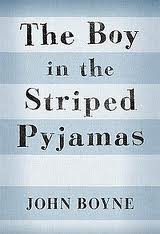
Here are the books we chose to use:


All of these books (except # the Stars were new to me). I had seen snippets of The Boy in the Striped Pajamas movie, but had not read the book. Of course, we were concerned about age appropriateness. Although I don't think I would embark on this study with lower than 5th graders, I felt all of the books were very appropriate and held students attention the whole time.

I love Jerry Spinelli and was so pulled into Milkweed (and Jerry's poetic, rich way of writing) that I had to run to Barnes and Noble to buy my own copy so that I could mark it up with underlines, stars, and comments. Yellow Star was the perfect book for my readers who need to build stamina. Jennifer Roy writes the story of her aunt Syvia (who was taken to Lodz ghetto with her family at the age of 4) and crafts the scenes of the story in short, easy to read poems. I also love this book for the historical fiction unit (although of course it isn't fiction) because each historical change or transition that happened in Lodz ghetto is written about through a nonfiction introduction before each section of the story. So, we hear about what was happening in a direct, historical summary sort of way, and then we read about it through Syvia's young eyes.  

The Boy in the Striped Pajamas was an easy read. If you have not read it, Bruno and his family move from Berlin to Auschwitz because Bruno's father is a high-ranking general. They live right outside of the concentration camp, and through exploration, Bruno meets Shmuel (a young Jewish boy, ironically born on the same exact day as Bruno) who lives on the other side of the fence. Throughout reading this novel, we have to pick up clues about how the Jews were treated, who Bruno's father is, and deal with the naivety of Bruno who complains about having to leave his 5 story house in Berlin as Shmuel is wasting away in the concentration camp.

In this unit, we have created double-timelines (using the top half for what is happening in the character's life and the bottom half to record the historical information we learn from the book). Students launched their book clubs by creating club names and club norms that they hold themselves accountable for following. My goal is that students read two books from the unit in their book clubs so that we can focus on making rich text-text connections and compare and contrast the characters, setting, and the author's handling of the material.

I thought you might like a copy of our parent letter that we sent home prior to the unit to give families a chance to talk about the topic, preview their child's book if desired, and ask questions about the unit. This has been one of my most favorite units as it has allowed us to talk about human behavior and to question history.

I have uploaded the letter to my teacherspayteachers store as a freebie. It is a word doc so that you can modify it however you like for your own use. 

I hope to have more time to write about this unit and share some of our minilessons. As for now, it's off to work on report cards...fortunately, we only have 9 more school days until our FALL BREAK!!! :) 

Thursday, August 2, 2012

Back to School 2012-2013 Social Studies Workshop Part 2

In this post, I hope to get into the nuts and bolts of my social studies workshop. How do I plan for each component of the workshop and the flow of the week?

Well, first I have to explain my change in thinking  about how to plan for social studies.

I used to think "Okay, I'm teaching Colonization/Revolutionary War for 4 weeks and we will get as far as we get before it's time to move on to Science." Depending on the how fast the group of children works, we may get through activities and assignments at a good pace, but inevitably, I have to cut some of my activities and learning plans.

By planning through the workshop model, I figured out that it makes sense to break the concept down into smaller topics and plan to spend just a week on those concepts. I chose to break our Colonization/Revolutionary War unit into the following 4 topics: Week 1: The Thirteen Colonies, Week 2: The Colonies Rebel, Week 3: Important People of the Revolution, Week 4: Important Battles of the Revolution. This will nicely set the foundation for our 2nd nine weeks' social studies unit, Government.

Okay, let's get to planning. Here's my social studies planning template again:
 
1st, I gather many different kinds of resources and decide on my minilesson plans. Will I use a read aloud, poem, video clip, interactive smartboard activity, or a question and quick write to launch a discussion? Is there an important person or event that students won't learn about through their work stations that I can teach them about in minilesson?

Next, I pull materials for small groups. We have guided reading materials that came with our social studies textbook. These are good for my below-grade level and average readers. For my higher readers, I plan to use the Joy Hakim series entitled A History of US. I could also choose to use historical fiction and make the small groups more like a book club. (I may do this later in the year for another unit, but for our first unit, I chose to focus on nonfiction reading skills.) We have a great book room that we have worked hard over the years to make sure provides us with materials that connect to the content areas. With social studies workshop, now we can definitely utilize them even if we are studying fiction in readers' workshop. Sometimes it might even make sense for me to pull a chapter from the social studies book to utilize during small groups--the possibilities are truly endless, but  I want to make sure I am supporting students' learning of literacy skills and deepening their understanding of the time period.

Next, I think about what stations or tasks I want to have. With stations being Tues, Wed, and Thurs, students will have two stations and one day that they meet with me during the work time portion of our workshop. What materials and activities have I used in the past that I want to use in stations? For this first go-round, one of my stations will be computer-based so that students can use technology to learn and one of my stations will be a research station that allows us to share our learning through a jigsaw or carousel activity on Fridays.

Now that I am ready, I group my students and think about which day would be best to meet with each group. Might one group of my students need me to teach them research strategies in their small group before they go to the research station? (Of course!). I also think about which students would benefit from a partner at the computer station and research station and try to organize my groups so that they have the support they need while I am working with small groups.

One last thing I have to plan for is fast-finishers. Now, with this structure, I feel like I will rarely have fast finishers, but I still need to plan for them given that one of my purposes for social studies workshop was that some students could accomplish more learning during social studies time. I decided to begin with three simple choices for our first unit: pull a book from the Colonial/Revolutionary War book bin, read, and represent your learning in your knowledge notebook; choose one of the RAFT writing ideas and write a piece in your knowledge notebook; work on your timeline booklet, adding more events from this time period.

I may change this structure as the year goes on, but these are my plans for using a workshop model in our first social studies unit. I'm super excited to see how it goes.

How is your social studies instruction going? Am I just a slow-learner or are these the things you tweak as you gain more experience?

Monday, July 30, 2012

Back to School 2012-2013 Social Studies Workshop

Are you getting ready for the 2012-2013 school year? This year, I am embarking on the journey of trying to implement a social studies workshop into my classroom instruction. This summer, I spent a few days in a workshop provided by my district. One of the big ideas was looking at the workshop model across the curriculum and to consider how this might help us meet our common core standards during other parts of the day while also (quite possibly) deepening our instruction in those content areas.

How do you define a workshop model? In its simplest form, a workshop model includes a minilesson (where the "expert" is offering some advice or tip), work time (where students are working independently, in partners, and often times with the teacher), and a debriefing (where you discuss what was learned--whole group or with a partner, questions that still remain, or you highlight the work that was done during work time that might benefit other students).

At our school, most of us teach social studies for 1/2 of the nine weeks and science for the other 1/2. We also integrate social studies and science topics into our reading and writing instruction throughout the year.

As I thought about implementing a social studies workshop, I had a few aha! moments and rationales I had to formulate. 

1. A workshop model fits perfectly with the other routines/ideas I worked on for social studies this summer--Student Timeline Notebooks and the Social Studies Big Idea Bulletin Board. I can use timeline activities to introduce the time period, as one of my stations, and as something students work on if they finish their "work time" station. The Bulletin Board (and student summary sheet) can be one of the ways I debrief and help students tie everything together.

2. A workshop model can be thought about vertically and horizontally as I plan (vertically meaning the 45 minutes I have for social studies that day--minilesson, worktime, debrief). Horizontally, I can move my social studies workshop week through "introduction (Mon), working in stations (Tues-Thurs), and reflection (Fri)"--doesn't this sound a lot like "minilesson, work time, debrief"?

3. Workshop Model does not have to mean stations AND using stations does not mean I have to do so every day. One thing that might hold a teacher back from using the workshop model is not wanting to give up whole group instruction time completely or that there are many things we can do in social studies in whole group and with partners that take more than  the 5-10 minutes you have for minilesson.

It might help explain what I'm thinking by looking at the planning template I designed for our social studies workshop: 
Although I did not list a debrief on Tues, Wed, and Thurs, I will have a debrief on each of those days. It might simply be "Who's a new person you learned about today?" "What's a new event you learned about today and why was it important?" I plan for my minilessons to take 5-7 min, work time to be 30 min, and the debrief to be 5 min.

4. HOLD UP! Why am I going to put myself through doing all of this work? This was one of the questions I had to find a good answer to before I was completely sold on a Social Studies Workshop. Why should I would put the energy into setting up this structure, teaching students the routines, and breaking social studies down to the point where I might actually be planning more for it? With this question, what you really have to consider is the role of the teacher. What will you (I) be doing while students are in "work time?" How will my expertise as the teacher be utilized? Well, this is an opportunity for me to provide more small group instruction. Consider this an extra literacy block. We might be studying fiction during reading, but in social studies workshop small group time, I can teach students how to read nonfiction, find the main idea, use text features, consider the author's perspective, read historical fiction, analyze primary documents, read for fluency, break words apart, determine the meaning of unknown vocabulary, etc. If I am using some form of stations, my big question is WHY? Why do  I want to have students doing different things if they are all going to end up doing the same things in the end? I as the teacher have to have a purpose for why I am doing this. I think being able to increase my small group literacy instruction is the PERFECT reason for structuring a social studies workshop.

5. Another way I answered the "why" question was to think about how whole group instruction in social studies typically goes. Let's say we are going to read and discuss a section of the social studies book (I don't do this a lot, but sometimes it makes perfect sense). Okay, 8-12 of my readers are ready to discuss at the same time, 3-4 of my readers won't be ready until the end of our social studies block leaving no time to discuss, and a few of my students may not really be able to understand the text. What are the students who are finished doing? "Just hold tight...soon everyone will be finished and we'll talk about it. You can look at other parts of the lesson or read farther if you want." They may wait to the point where we have to discuss what we read the following day. Hmmm. not what I planned and one of the reasons why we won't get through all of my plans. (I just want to add a side-note here that of course I am scaffolding my readers and trying to help them with the text during this time).

So, here's the conviction that I came to. I have students who CAN LEARN MORE. I have students who need things BROKEN DOWN MORE. Given 12 events related to the Revolutionary War, I will have students who can learn about 20, I have students who can successfully learn about the 12, and I have some who may only be able to complete 3. It's not fair to hold the students who can learn more back for the sake of moving everyone along at the same pace through my whole group instruction. This is what we do when we consider ourselves the main source of information (I'm guilty of this for sure). A workshop model with independent work time where students can work at their own pace is a perfect solution to this---differentiation at its best. And, since everyone is doing "different things," I can really modify that task for my kids who need it and no one will notice.

Lastly, how do we fill in the holes for students who are moving at a slower pace? Mini-lesson and debrief times are opportunities to pull everything together. Students will hear about different events from one another and will still meet the overall goal of having a working understanding of the time period. The small group/guided reading time for these students will also pull the time period together and allow me to build more background knowledge for them. When reading, they will be able to connect to what they have learned in the stations, minilesosns, and debriefs to the text. Friday, share day, will also provide them the opportunity to learn from what other students have learned.

I hope I have your social studies wheels spinning. What do you think about the workshop model in social studies? (Maybe it sounds so simple, but it was definitely a structural shift in thinking for me).

Most importantly, I don't think it is going to ADD to my planning too much at all. I actually think it is going to simplify my planning, especially with the gorgeous planning template I made that helps me remember the components I need to plan for.

In my next post, I'll walk you through my planning process.

Wednesday, July 25, 2012

Back to School 2012-2013 Bulletin Boards Tour # 2

I have two more bulletin boards to share with you today...my content area bulletin boards for Social Studies and Science. This summer, I worked on a social studies board that would allow us to represent the time periods in United States History that we study as well as the themes of social studies. Here's what I came up with:

There are many reasons why I love this board, and as I kick off the school year, I'm finding more things to love about it! I have really been reflecting on social studies and trying to figure out what pulls it all together--I think my timeline notebooks and this bulletin board are going to streamline my social studies instruction, make it MEATY-er, and spiral many of the themes in history throughout the year so that my students (young as they are) can start to understand the big ideas and themes that keep popping up in history. 

Later this week, I'm going to tell you about my social studies workshop.  One component of social studies workshop is a 5-7 minute minilesson. I love this board because our minilesson can focus on an aspect that we aren't going to study in too much detail, but I can talk about it enough that we can summarize it on our board and make connections with what we have learned so far. Basically, it can allow me to elicit students ideas and create knowledge about the strands in social studies even if we don't have a ton of time to spend on that aspect. I also love that this board will allow us to make connections between time periods. For example, when we study the Civil War, we can go back to Colonization and the American Revolution to examine how the economies of the Northern and Southern colonies differed and how the fear that the constitution would not be ratified planted the long-term seeds of slavery. 

Another component of social studies workshop is a debrief or reflection. Many of our debriefs will focus on composing a paragraph that summarizes the knowledge we have gained about the different aspects of social studies, for example, the geography of the colonies. We can then post our summary on the bulletin board. 

In very similar fashion, I created the following bulletin board for science. I had to use two of my small bulletin boards to display our science curriculum for the year. Here we will post our key learning from the unit. These are the big ideas that I need students to master and walk away with. I also had in mind to add a section for each goal for key vocabulary, but I didn't have enough space on the board, so I am posting our science vocabulary in another area of the room.

If you would like to download the social studies bulletin board materials, it's a freebie on TPT. 
If you are a 5th grade NC teacher and would like the science bulletin board materials, I have put it in google docs for you. 

Have you made functional bulletin boards for your classroom? What I love about these is anyone (student, teacher, principal, parents) can walk into the room and see what we are going to be learning by looking around.

Social Studies workshop....coming up!

Monday, June 25, 2012

Social Studies Galore!--US History Student Timeline

Do you use timelines in your classroom? I have researched timeline books for YEARS (for real) and tried to find a format that I could be happy with. Most of what I could find wanted me to buy their spiral bound book (not gonna happen at 10-15 bucks for 20+ kids). Others suggested using sketch pads and writing the dates at the top or bottom corner of each page. This idea was not organized enough for me and I could just see my kids going through the numbering part...even if they did it correctly, it would take forever. I also didn't like with that method that I was unable to put some kind of structure in place on the page. In another attempt at making a classroom timeline with clip art, I found US History clipart very lacking (even the clip art that was for purchase) and most all of my students love it when I bring a drawing activity into the classroom, so why buy a program when they can draw? Again, I was back to needing to create a structure I liked myself.

FINALLY, I think I have a timeline format that I.can.live.with.and.love!..and be super excited about. First, I created snazy new covers (5 versions to choose from). Then I decided I would try out a portrait version instead of the landscape version I had tried at first. Right now, I LOVE the portrait version because it will work well in a binder and will make sense when students are flipping pages.

Timeline booklets will be used at the beginning of every social studies unit and throughout the unit as we learn about new events. I will be doing timeline activities where students are given a list of key events, they have a summary sheet to complete, then they create a symbol/picture for the event, place it on the timeline with a sentence about the event. The timeline activity provides background knowledge for students to connect to when learning about events more deeply through later classroom lessons. (You can also use the jigsawing strategy a lot with timelines--four kids research four different events, then share info with the other three in their group, etc.). Our social studies book is a great resource for the timeline activity because it gives a very dry summary...making those later classroom lessons so important, but helping to give an overview (and finally give me a dang use for those not-so-exciting-books). Here's a little example from my Civil Rights timeline project. (A freebie on TPT).
A Landscape Student Timeline Example 

Summary Template

We will also be creating a classroom timeline. When students have completed all of the events on the timeline, I will give them an event to add to our classroom timeline. They can transfer their learning onto the template and attach it to the classroom timeline.Students draw a picture to show the event on the front and summarize the important things that happened on the back of the card. Here's an example:

You can get the new and improved US History Student Timeline Books now on TPT. The years in the book range from 1612 to 2020. I can't wait to break these out when school starts back. I asked my students to bring in an extra binder...we will dedicate that binder to the Timelines and the summary of history sheets I shared in my last post.

PS--My Overarching Themes of Social Studies bulletin board  that I wrote about in my last post would be great paired with the timeline books as routines that would be easy to implement into your social studies instruction...I changed that product to a FREEBIE by the way!

Keep following my blog for future updates of timeline ideas....CAN YOU TELL I'm OBSESSED?

Monday, June 18, 2012

Social Studies--Overarching Themes Bulletin Board

Social Studies....how do you teach it all? represent it all? keep it all together? Do you teach through themes or do you teach through history? If you teach through history (like I do), how do you hit geography and economics? If you hit geography and economics, how do you get past the American Revolution? Well, I know one answer is that we often integrate history topics into readers' workshop (historical fiction gives us a great opportunity to learn about something we won't have time for in social studies block) and another way is to incorporate a few of the topics into a nonfiction writing project (like our Washington, DC "History is Interesting" feature articles). Okay, I've done both of those! But, I wanted a way to represent these themes/strands and time periods that we are supposed to learn about in one place.

Here's what I came up with...the era's are across the top and themes/strands are down the left side. I have more eras and more themes, but my bulletin board ran out of space :( .  We will use this to reflect on and summarize our learning. The beauty of it is, WE (I) WILL BE ABLE TO SEE THE HOLES IN OUR LEARNING :)


I also love this (for the holes reason) because I might find that I am unable to teach a whole unit on one of the topics in history, but I'm sure I can find a day or two to let students learn a little bit about the topic we wouldn't get to otherwise (see my Civil Rights Era Timeline Activity for an example of a valuable 2-day project that builds background knowledge). I kinda feel like I can use this to do an "it's better than nothing" couple of lessons on the parts of history we won't get to go in depth on. Then, students will have some background knowledge for future history classes. (I feel so guilty admitting that we don't get to it all, like it's some secret the people who make the social studies standards don't want us to say out loud.)

In my defense, I truly feel this will up the level of social studies teaching in my classroom and the understanding of social studies for my students. (And such a simple idea :) I also plan to have students create a working timeline as we study different time periods. We will start the year off with an "overview of United States History" timeline activity. (Which I will happily share when it's completed :)

My next thought was, okay, this is great for a classroom representation, but how will the kiddos represent and track their learning without it being a huge chart with itty-bitty blocks for them to have to try to cram information into. Thus, this 2 pg template was born.

This could be used as a prior knowledge template and then an end of unit assessment. I love the idea of using this as an assessment/quiz piece at the end of the unit, especially since students and I will complete it together throughout the unit as we learn about the time period. I worry about using it at the beginning of the unit because students might not know very much at all---maybe they could work in partners or small groups :) It's always good to get a measure of prior knowledge, even if the knowledge is incorrect or full of misconceptions.

Download everything you need to get this bulletin board started at my tpt store.

Happy teaching! I hope this social studies idea is a super-awesome-amazing problem solved for your classroom :)

LinkWithin

Related Posts Plugin for WordPress, Blogger...